
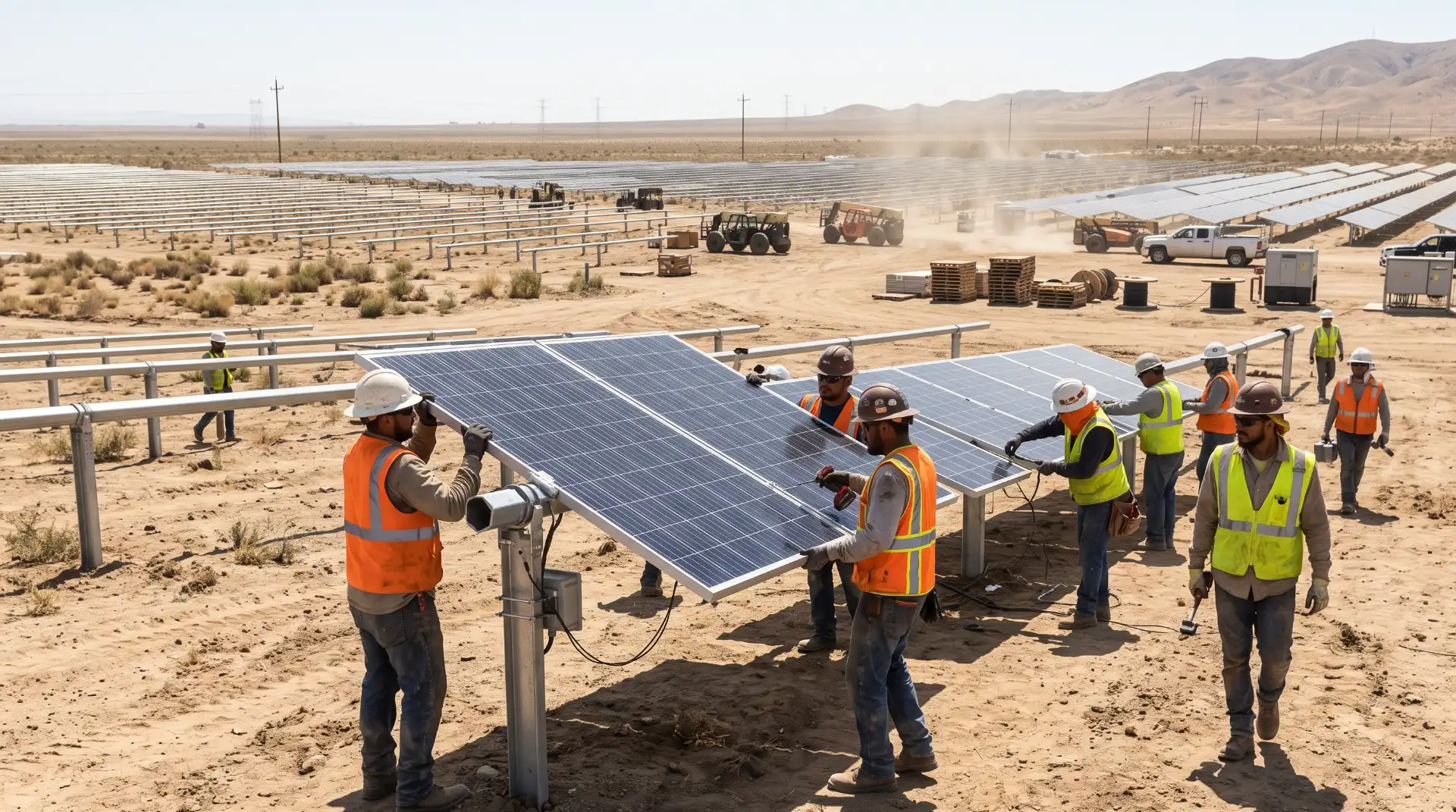
Why Kern County Is Becoming a Solar Energy Hotspot
Kern County, California, has long been associated with oil production, agriculture, transportation, and the rugged landscapes of the southern San Joaquin Valley. Today, however, another industry is reshaping portions of the region: large-scale solar energy development. Vast stretches of open land, abundant sunshine, established energy infrastructure, and access to California’s electricity market have made the county an important location for renewable energy investment.
The transformation is more than a story about rows of photovoltaic panels appearing across the desert. Solar development is connected to a much larger conversation about California’s electricity supply, climate goals, battery storage, employment opportunities, land conservation, and the future of communities that have traditionally depended on agriculture and fossil fuels.
Kern County’s solar expansion is also visible in the public planning process. In June 2026, the county approved the Discovery Solar PV and Storage Project, a proposed development described in state environmental records as capable of generating up to 1,400 megawatts of renewable electricity and incorporating up to eight gigawatt-hours of energy storage. Another major proposal, the Buttonbush Solar and Storage Project, was documented in March 2026 with a proposed generating capacity of up to two gigawatts and approximately 16 gigawatt-hours of battery storage. These figures describe project proposals, not proof that the facilities are already operating at those capacities. Source: California Environmental Quality Act records for Discovery Solar and Buttonbush Solar.
These developments illustrate why Kern County deserves attention as California’s energy system evolves. They also raise important questions about how projects should be designed, where they should be located, how local residents can benefit, and how environmental impacts can be managed.
For residents, business owners, farmers, visitors, and anyone interested in the region’s future, understanding the Kern County solar energy boom provides a useful window into the changing economy of California’s Central Valley and eastern desert communities.
Why Kern County Is Attractive for Solar Energy Development
Abundant Sunshine and Open Landscapes
Solar energy begins with a basic resource: sunlight. Kern County’s long sunny periods and dry inland climate create favorable conditions for utility-scale solar installations. Compared with regions that experience frequent cloud cover, much of the county offers developers opportunities to generate substantial amounts of electricity from photovoltaic panels.
The county’s geography also matters. The southern San Joaquin Valley, western desert areas, and portions of the eastern county contain broad landscapes that may be considered for energy infrastructure. However, not every open parcel is suitable for development. Agricultural productivity, flood risk, wildlife habitat, slope, existing communities, land ownership, and access to transmission lines all influence whether a site can support a particular project.
A solar farm is therefore not simply placed wherever sunlight is available. Developers must assess the land, secure the necessary approvals, arrange access to the electricity grid, and demonstrate how potential environmental effects will be addressed.
A Long History of Energy Production
Kern County already has an established energy economy. Oil fields, natural gas infrastructure, wind farms, electrical facilities, contractors, and energy-related businesses have helped shape its industrial landscape for decades. Solar power is entering a region where energy development is familiar, although its technology, land requirements, operating methods, and workforce needs differ from those of traditional petroleum operations.
Existing energy expertise can provide a foundation for renewable projects. Electrical contractors, heavy-equipment operators, construction firms, surveyors, maintenance workers, and environmental consultants may find opportunities in the expanding sector. Businesses with experience working on industrial sites may also be positioned to compete for contracts when they meet a project’s technical and safety requirements.
Still, renewable energy is not a direct replacement for every job associated with oil production. A solar installation generally needs a large construction workforce during development but a smaller permanent workforce once it is operating. The long-term economic effects depend on the number of projects built, the availability of local contracts, and whether workers can transition into suitable roles.
H3: Access to California’s Electricity Market
A solar project needs more than panels and sunshine. Its electricity must reach homes, businesses, industrial facilities, or other customers through the power grid. Transmission capacity, interconnection agreements, substations, and regional electricity demand can therefore determine whether a promising project advances.
Kern County’s location within California’s broader energy network makes grid infrastructure a central consideration. Yet access is not guaranteed. New projects can encounter transmission constraints, costly upgrades, lengthy interconnection processes, and competition with other developments seeking to connect to the same system.
These challenges explain why a solar project can be proposed, reviewed, and even approved without immediately beginning commercial operations. Project developers must coordinate permits, financing, equipment procurement, construction schedules, and grid access before electricity can be delivered.
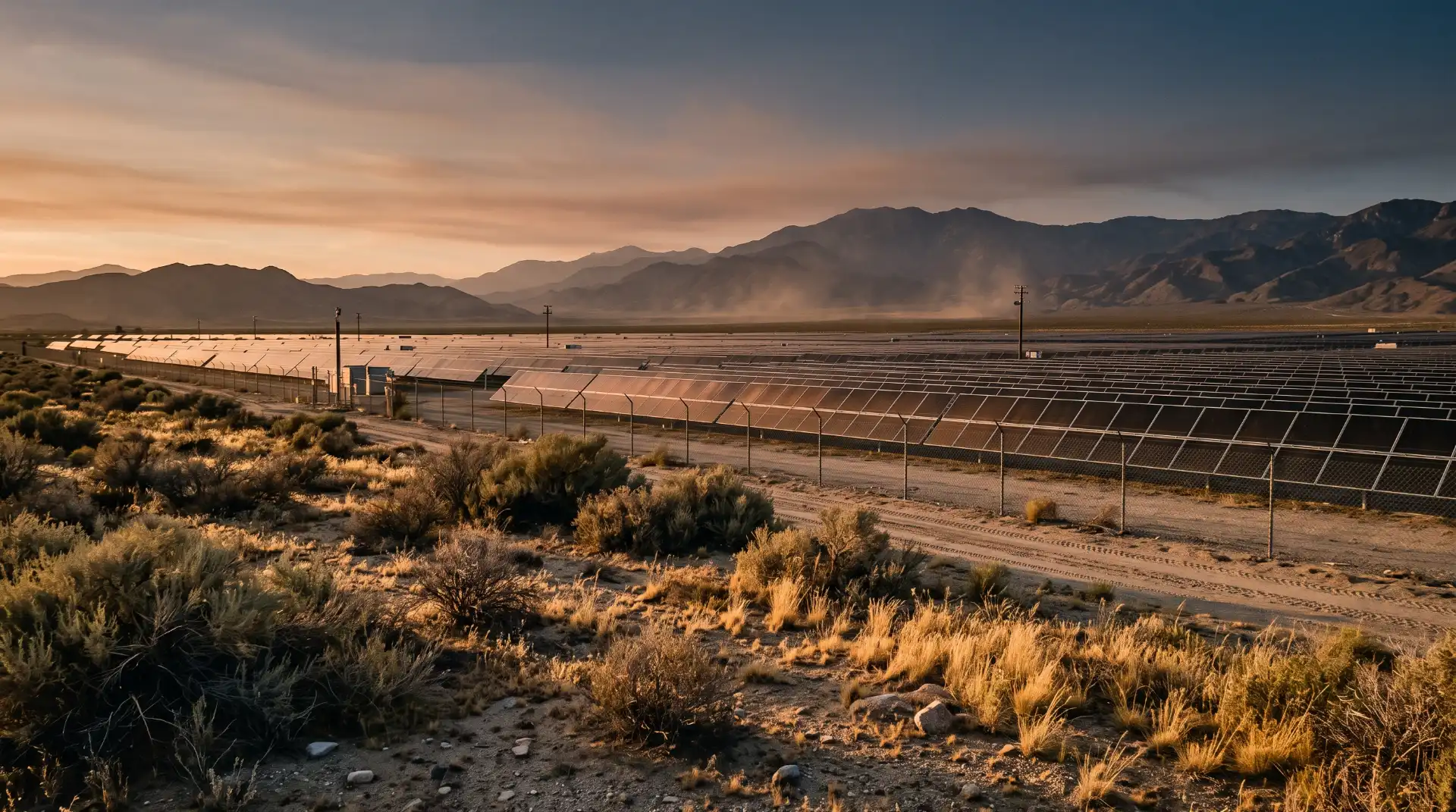
Major Solar Projects Changing the Local Energy Landscape
Kern County’s renewable energy expansion includes projects at different stages of planning, environmental review, and approval. Understanding those differences is essential when evaluating claims about the scale and speed of development.
Discovery Solar PV and Storage Project
The Discovery Solar PV and Storage Project is one example of the scale of development being considered in southeastern Kern County. According to the California environmental review record, the proposal covers approximately 7,700 acres and includes a potential solar generating capacity of up to 1,400 megawatts, alongside up to eight gigawatt-hours of energy storage capacity.
The county’s Board of Supervisors approved the project in June 2026, and the environmental record identifies significant environmental impacts alongside adopted mitigation measures. That distinction matters because approval does not mean a project has no environmental consequences. It means the project proceeded through the applicable decision-making process, with required findings and mitigation conditions.
A project of this size can involve extensive construction planning, site preparation, panel installation, electrical equipment, battery facilities, access roads, and grid connections. Its ultimate contribution to the local economy will depend on implementation, construction spending, hiring practices, and the contracts awarded to local suppliers.
Readers interested in the details can consult the official Discovery Solar project record, which provides a more reliable basis for understanding its proposed capacity and approval status than generalized promotional claims.
Buttonbush Solar and Storage Project
The Buttonbush Solar and Storage Project provides another example of large-scale renewable development. State environmental records describe a proposal in northwestern Kern County involving several sites, with a potential combined solar generating capacity of up to two gigawatts and battery storage of approximately 16 gigawatt-hours.
The proposal covers roughly 11,983 acres of privately owned land across seven sites. Its scale highlights the amount of land and infrastructure that can be involved in utility-scale energy development.
However, proposed capacity should not be confused with electricity already being produced. Developers must meet project requirements, secure the necessary financing and grid arrangements, and complete construction before a facility can deliver power commercially. Individual project components may also progress on different schedules.
The project illustrates a broader planning challenge: how can the county accommodate major energy investment while protecting agricultural resources, addressing environmental concerns, and providing meaningful benefits to nearby communities?
The Buttonbush Solar and Storage Project record is a useful starting point for readers who want to examine the development’s documented scope.
Winston Solar and the Continuing Project Pipeline
Not every project appearing in the county’s planning records has received final approval. The proposed Winston Solar Project, for example, entered the environmental review process in April 2026. The notice described a photovoltaic facility capable of generating up to 200 megawatts, with up to 200 megawatts or 1,600 megawatt-hours of battery storage, on approximately 1,357 acres in western Kern County.
At that stage, the project was the subject of a notice of preparation for a draft environmental impact report. This is an early step in the environmental review process, not evidence that the project has been completed or is operating.
The distinction between proposed, reviewed, approved, under construction, and operational facilities is especially important in a fast-changing industry. Project names and headline capacity figures can create the impression that every proposal will eventually become a functioning power plant. In practice, some projects change, encounter obstacles, remain delayed, or never proceed.
Residents can monitor the Winston Solar Project environmental record and the Kern County Planning and Natural Resources Department for updated documents and project information.
How Solar Farms Work in Kern County
From Sunlight to Electricity
Most large solar farms use photovoltaic panels that convert sunlight directly into electricity. When sunlight reaches the semiconductor material inside a panel, it releases electrons and produces direct-current electricity. Inverters then convert that electricity into alternating current suitable for the electrical grid.
Thousands of panels are arranged in carefully engineered configurations. Depending on the project, panels may be fixed at an angle or mounted on tracking systems that follow the sun throughout the day. Tracking can increase energy production, although it also affects equipment requirements, maintenance, and project costs.
The electricity generated by the panels travels through electrical collection equipment and typically reaches a substation before being transmitted to the grid. A project may also include monitoring systems, maintenance roads, security infrastructure, drainage features, and equipment buildings.
The desert setting presents practical challenges. Dust can accumulate on panel surfaces, extreme heat can affect equipment performance, and strong winds can create maintenance concerns. Operators must account for these conditions when selecting equipment, designing the site, and planning ongoing inspections.
Why Battery Storage Is Becoming More Important
Solar panels produce the most electricity when sunlight is available. Electricity demand, however, does not always peak during the middle of the day. Evening demand can remain high after solar production begins to decline, creating a need for other energy sources or storage.
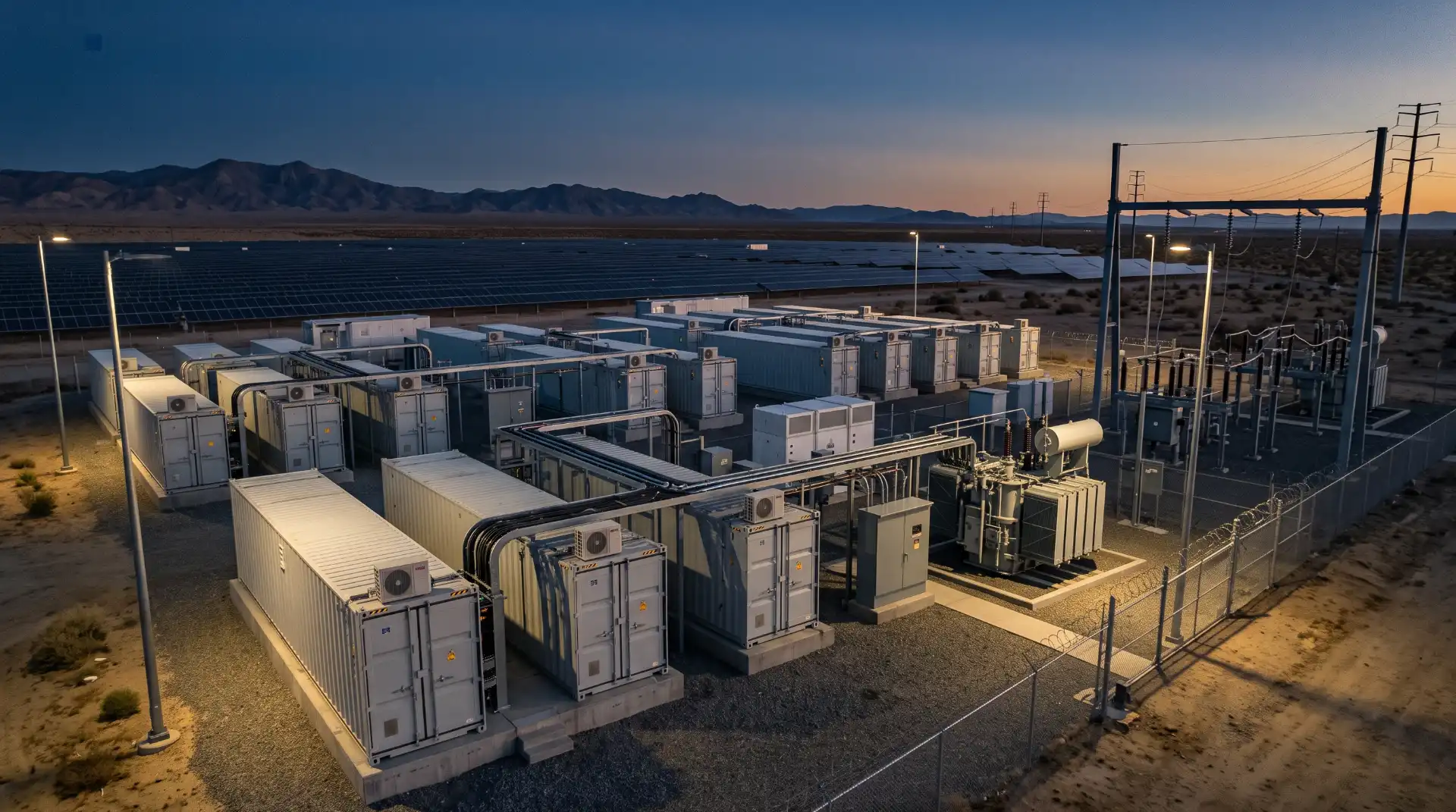
Battery energy storage systems help address this mismatch. Batteries can store electricity when generation is abundant and discharge it later, subject to their capacity, efficiency, operating conditions, and available stored energy. They can also provide certain grid services that support electricity system reliability.
This is why major Kern County proposals increasingly combine solar generation with battery storage. A solar-and-storage facility can potentially deliver some of its energy at times when it would otherwise be unavailable directly from the panels.
Nevertheless, batteries do not create electricity. They shift electricity across time and lose some energy during charging and discharging. Their benefits depend on how they are operated, the source of the electricity used to charge them, and the needs of the grid.
Battery systems also require careful fire prevention, emergency planning, monitoring, and maintenance. Local authorities and project developers must consider appropriate safety measures, access for emergency responders, and plans for dealing with equipment failures.
Economic Opportunities for Kern County Residents
Construction Jobs and Skilled Trades
Large solar developments can create demand for workers during site preparation and construction. Depending on a project’s design and schedule, employment may include electricians, equipment operators, laborers, welders, construction supervisors, truck drivers, surveyors, and technicians.
Specialized work may also be needed for electrical substations, battery installations, communications equipment, and grid connections. These activities can support contractors and suppliers beyond the immediate project site.
Local workers may benefit when developers recruit within Kern County and collaborate with training providers. Community colleges, trade schools, apprenticeship programs, and workforce development organizations can help residents develop skills relevant to electrical work, industrial maintenance, construction safety, and renewable energy operations.
The number and duration of available jobs vary considerably. Construction employment is often temporary, and some positions require licenses, certifications, or experience. Prospective workers should therefore verify actual hiring announcements, qualifications, wage information, and apprenticeship availability rather than relying on broad claims about projected employment.
Opportunities for Small Businesses
Renewable energy projects can create indirect opportunities for local companies. Construction crews and technical staff may need lodging, food, transportation, equipment rental, maintenance services, and other support. Project owners may also contract with qualified businesses for site preparation, landscaping, security, waste management, and specialized technical services.
These opportunities can benefit companies in Bakersfield and smaller communities when procurement policies and project schedules allow local participation. However, local firms must compete on price, reliability, safety standards, insurance, and technical capability.
Small businesses interested in this sector can begin by identifying the types of services developers typically purchase, registering with relevant procurement systems, and building relationships with established contractors. Businesses should also evaluate payment terms and staffing requirements before committing resources to a large contract.
The long-term community impact is strongest when projects build durable local capacity instead of relying exclusively on outside contractors. Training opportunities, supplier outreach, and transparent hiring practices can help more of the economic value remain in the region.
H3: Property Taxes, Public Revenue, and Community Benefits
Energy developments may contribute to public revenue through applicable property taxes, fees, agreements, or other legally required payments. The amount and distribution of those benefits depend on the project’s ownership, tax treatment, agreements, and local arrangements.
Potential public benefits should be evaluated alongside public costs. County agencies may need resources for planning, inspection, road maintenance, emergency preparedness, and enforcement. Construction traffic can also affect nearby roads, while new transmission infrastructure may require additional coordination.
Community benefit agreements can sometimes address locally identified priorities, such as workforce development, infrastructure improvements, or environmental programs. Their value depends on the details: which commitments are enforceable, who receives the benefits, how progress is measured, and what happens if a developer fails to meet its obligations.
Residents should seek project-specific financial disclosures and county records rather than assuming that every solar installation produces the same tax revenue or community investment.
Solar Energy and Kern County’s Traditional Oil Economy
Kern County’s energy transition is particularly interesting because renewable development is occurring in a region with a long history of oil production. These industries differ in their environmental footprints, labor requirements, supply chains, and revenue patterns, but they increasingly exist within the same regional economy.
Solar power may diversify energy investment and create new pathways for workers and contractors. Some skills used in traditional energy operations, including electrical maintenance, industrial safety, heavy-equipment operation, and project management, can be relevant to renewable energy work. Additional training may still be necessary because solar systems and battery technologies involve different equipment and technical procedures.
A changing energy mix does not mean oil production will immediately disappear from Kern County. Petroleum demand, state and federal policy, market prices, infrastructure, and the pace of technological change all influence the future of the traditional energy sector.
For local communities, diversification can be valuable because reliance on a single industry leaves a region vulnerable to market downturns. Renewable projects may contribute to a broader economic base, but they also bring different risks, including development delays, changes in energy prices, and uncertainty about long-term investment.
The most realistic view is that Kern County’s energy future will likely involve managing a changing combination of industries rather than an instant transition from one source of employment to another.
Environmental Benefits and Important Trade-Offs
Lower Operating Emissions
Solar power generates electricity without burning fossil fuels at the point of generation. When solar electricity displaces electricity that would otherwise have been produced by a more carbon-intensive source, it can reduce power-sector greenhouse gas emissions.
The actual climate benefit depends on which electricity sources are displaced, when solar power is generated, how storage is used, and the emissions associated with manufacturing, transporting, installing, and eventually retiring equipment.
Solar farms also have environmental costs. Panel production requires materials and energy, construction disturbs land, and electrical and battery equipment must eventually be maintained and managed at the end of its useful life. Responsible project planning considers these impacts rather than treating solar energy as entirely impact-free.
Wildlife, Habitat, and Desert Ecosystems
Open desert landscapes may appear empty from a distance, but they can support wildlife, native vegetation, migratory species, and ecologically important connections between habitats. Construction can remove vegetation, disturb soil, introduce barriers, and alter drainage patterns.
Environmental review is therefore a major part of project planning. Depending on the location, assessments may examine protected species, habitat quality, biological corridors, cultural resources, and other sensitive features. Mitigation can include avoiding important areas, adjusting site layouts, limiting construction disturbance, restoring selected locations, or monitoring impacts over time.
The California Energy Commission’s Desert Renewable Energy Conservation Plan is particularly relevant to this discussion. The plan identifies areas for renewable energy development while considering wildlife, conservation, recreation, and the cultural heritage of desert regions.
For Kern County, the goal is not simply to build more solar capacity. It is to determine where development is appropriate, where protection should take priority, and how projects can reduce avoidable environmental damage.
Water Use and Dust Management
Water is an important concern throughout Kern County, where agriculture, communities, and ecosystems depend on carefully managed supplies. Solar photovoltaic facilities generally require less water during electricity generation than many conventional thermal power plants, but they still may use water for panel cleaning, construction, and dust control.
The actual amount depends on the technology, site conditions, cleaning schedule, and environmental requirements. Some operators use dry-cleaning approaches or other methods to reduce water consumption, although those choices involve their own operational trade-offs.
Construction can also generate dust, especially when large areas are graded or unpaved roads are used by heavy vehicles. Dust control measures, soil stabilization, speed restrictions, and carefully scheduled construction activities can help limit impacts on nearby residents and agricultural operations.
Water planning should therefore be part of the earliest project discussions. Residents can examine environmental documents for estimates of construction water demand, operational use, proposed sources, and dust mitigation measures.
Agricultural Land and Competing Uses
One of the most important local questions is whether large solar projects should occupy land that is currently used for farming or designated for agricultural purposes.
Kern County has a substantial agricultural economy, and productive farmland is an important long-term resource. Converting agricultural land to energy production can create conflicts over soil quality, food production, property rights, and future land availability. The significance of those impacts depends on the specific parcel, its agricultural value, the project’s footprint, and the possibility of alternative locations.
At the same time, landowners may view renewable energy leases as a way to diversify income or manage land that faces economic or operational challenges. Those decisions involve private financial considerations as well as broader public questions about land use.
A careful review should examine whether a project affects prime farmland, land protected by agricultural agreements, important habitat, or areas designated for other future uses. It should also consider whether less sensitive locations or previously disturbed land could meet the project’s objectives.
Agricultural compatibility is not a simple yes-or-no question. It requires site-specific evidence, transparent public review, and a realistic assessment of both immediate economic benefits and long-term land consequences.
Transmission Lines and the Challenge of Connecting New Solar Power
A solar farm can produce substantial electricity, but that energy has limited value if it cannot be delivered when and where it is needed. Transmission infrastructure is therefore one of the most consequential parts of Kern County’s renewable energy expansion.
New projects may need substations, transmission lines, interconnection facilities, and upgrades to existing equipment. Those improvements can involve separate permits, engineering studies, construction costs, and coordination with utilities and grid operators.
Grid congestion can also reduce the value of renewable generation. If many solar facilities produce electricity at the same time and transmission capacity is constrained, some available energy may need to be curtailed. Battery storage can help shift part of the output to different hours, but storage does not eliminate every transmission bottleneck.
The California Energy Commission’s land use and infrastructure planning resources explain how energy development, transmission planning, and environmental considerations are connected.
For Kern County, successful development requires coordination between project developers, utility companies, regional grid planners, state agencies, and local government. Without that coordination, projects may encounter delays even when the land itself appears suitable.
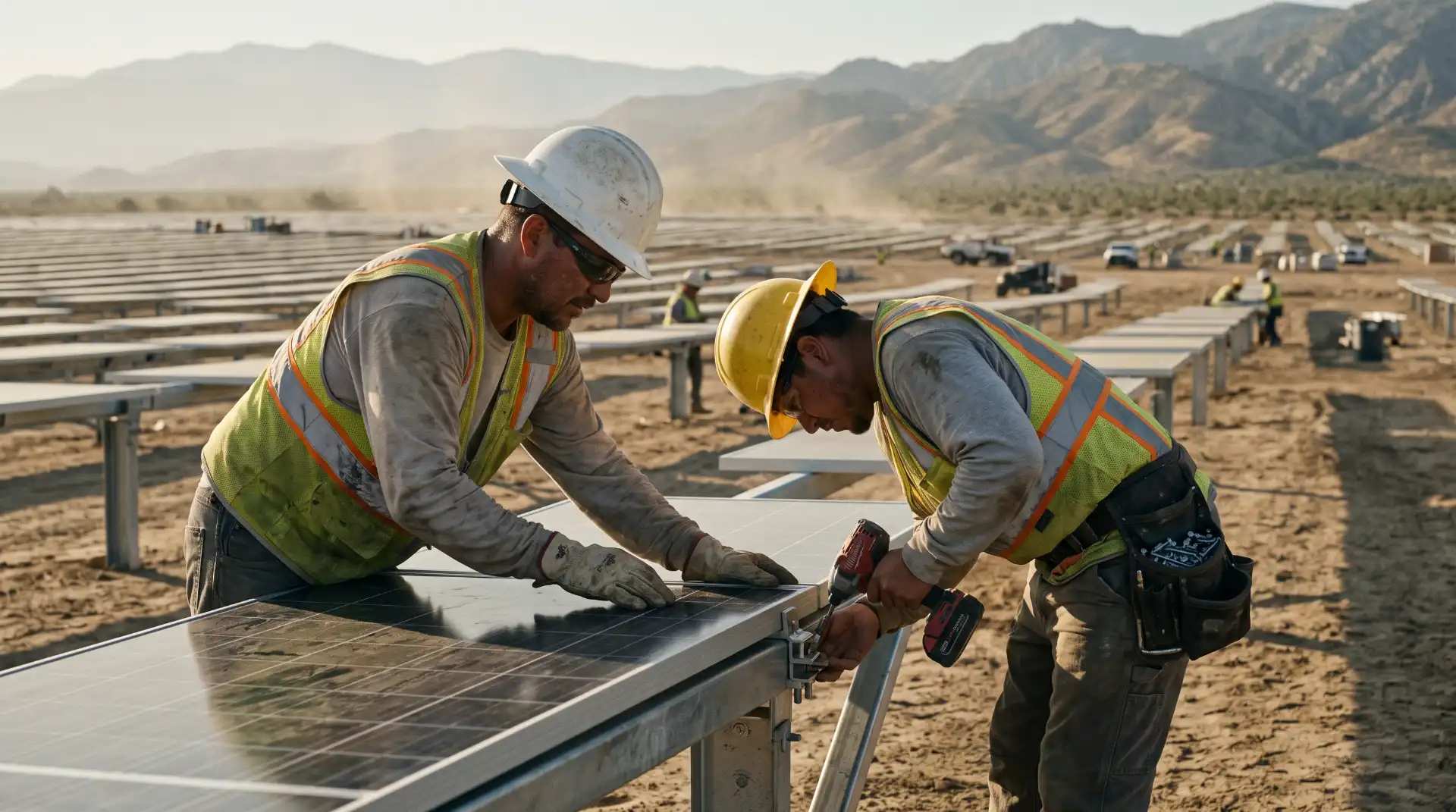
What Solar Development Means for Nearby Communities
Traffic, Construction, and Everyday Life
Large construction projects can temporarily change conditions for nearby residents. Heavy trucks may use local roads, equipment deliveries can increase traffic, and construction activity may create noise, dust, or temporary access restrictions.
These effects are especially relevant when a project is near rural homes, agricultural operations, schools, or community roads. The location of access points, construction schedules, delivery routes, and worker parking can influence how disruptive a project becomes.
Environmental documents and project conditions may establish measures to manage these impacts. Residents should review those provisions to understand what developers are required to do, which agency oversees compliance, and how concerns can be reported.
Public participation is most useful when it occurs early enough to influence project design. Comments that identify a specific road, drainage problem, wildlife corridor, or nearby sensitive use can be more actionable than general objections or unsupported assurances.
Public Participation and Environmental Review
California’s environmental review process gives the public opportunities to examine many proposed projects and comment on potential impacts. Depending on the project and its stage, relevant documents may include a notice of preparation, a draft environmental impact report, responses to public comments, a final environmental impact report, mitigation measures, and formal approval documents.
Kern County residents can use the county’s Environmental Documents Archive to identify current project records and supporting materials. State environmental notices can also provide project descriptions, lead agencies, document types, and dates.
When reading a project record, it is useful to distinguish between an applicant’s proposed features and findings adopted by the decision-making agency. A developer’s estimate is not necessarily a final operating figure, and a project approval does not mean every potential impact has been eliminated.
Residents who want to participate should check official notices for comment deadlines, hearing dates, document availability, and instructions for submitting comments. Those details can change as a project advances, so current official records should take priority over older news reports.
Solar Energy, Local Tourism, and Kern County’s Identity
Renewable energy development is also changing how people think about the landscapes surrounding Kern County’s communities. Visitors may encounter solar farms along regional highways or see large energy installations against the county’s mountain and desert scenery.
That visual transformation can prompt questions about how the region balances industrial growth, environmental protection, agriculture, and outdoor recreation. The answers will vary by location. A facility near an industrial corridor raises different concerns from one proposed beside a sensitive habitat or a heavily visited scenic area.
Kern County’s identity extends well beyond energy production. Its river corridors, mountain communities, desert landscapes, food traditions, and musical history remain important to residents and visitors alike.
Travelers exploring the area can also read our guide to planning a sustainable Kern River whitewater adventure, which discusses responsible recreation and environmental stewardship. Although solar development and river tourism are different subjects, both illustrate the importance of managing natural resources carefully.
Similarly, readers interested in the county’s agricultural and cultural identity can explore our guide to Bakersfield’s historic Basque Block. The region’s future depends on more than any single industry; its communities are shaped by the interaction of work, culture, landscapes, and local traditions.
What Residents Should Watch for Through 2026 and Beyond
The future of Kern County’s solar energy boom will depend on several developments that residents can monitor over the coming months and years.
First, watch for changes in project status. A proposal may move from early environmental review to final approval, construction, or operation, but each step should be verified through official records. Capacity figures should be attributed to the specific project and stage being discussed.
Second, pay attention to battery storage and grid infrastructure. Storage is increasingly important to the value of solar power, while transmission availability and interconnection arrangements influence whether new facilities can deliver electricity reliably.
Third, look for evidence of local economic benefits. Actual construction schedules, workforce recruitment, apprenticeship programs, supplier contracts, and publicly documented community commitments provide a stronger basis for evaluating economic effects than projected job numbers alone.
Fourth, follow discussions about agricultural land, water, wildlife, and public services. These issues can influence project design and the relationship between developers and nearby communities. Environmental mitigation is most meaningful when it is specific, measurable, and monitored over time.
Finally, keep an eye on changes in electricity demand and state energy policy. California’s broader energy transition depends on a combination of renewable generation, storage, transmission, flexible demand, and other resources. The role of individual Kern County projects will depend on how they fit into that larger system.
Residents do not need to be energy specialists to follow these developments. Reading county notices, checking project records, attending public hearings, and asking clear questions can help communities understand what is being proposed and how it may affect them.
The Future of Solar Energy in Kern County
Kern County has many of the ingredients that make large-scale solar development attractive: abundant sunshine, open landscapes, an established energy workforce, and a position within California’s electricity network. Major proposals such as Discovery Solar and Buttonbush demonstrate the scale of investment being considered, while projects at earlier stages show that the development pipeline continues to evolve.
The opportunity is significant, but the outcome is not predetermined. Solar farms can contribute to cleaner electricity generation, construction employment, energy storage, and economic diversification. They can also raise difficult questions about land conversion, habitat, water use, traffic, transmission infrastructure, and the distribution of local benefits.
The most successful approach will be one that evaluates each project on its merits. That means using accurate information, distinguishing proposed capacity from operating generation, involving affected communities, and applying meaningful environmental safeguards.
For Kern County residents, the solar energy boom is not simply a story about technology replacing one type of power plant with another. It is a continuing debate about how the region will use its land, build its economy, protect its natural resources, and participate in California’s changing energy system.
As new projects move through planning and implementation, the most important question will be whether renewable development delivers lasting public value alongside reliable electricity. The answer will depend on decisions made by developers, regulators, utilities, landowners, and local communities.
Kern County’s abundant sunshine creates an opportunity. Thoughtful planning, transparent oversight, and responsible investment will determine how much of that opportunity becomes a lasting benefit for the region.